

In this page
Data privacy (hiding the name of viewers and updaters)
Enable purge automation actions
Allow archiving, deleting, or purging content that has children
Notify users when a scheduled job fails
Global settings
You can configure the app's global settings as a Confluence administrator, going to Confluence Settings (cog icon "⚙" in the top right) → Apps → Better Content Archiving → Global settings. These settings affect the behavior of the app globally, regardless of which space it is used in or which scheme it is used with.
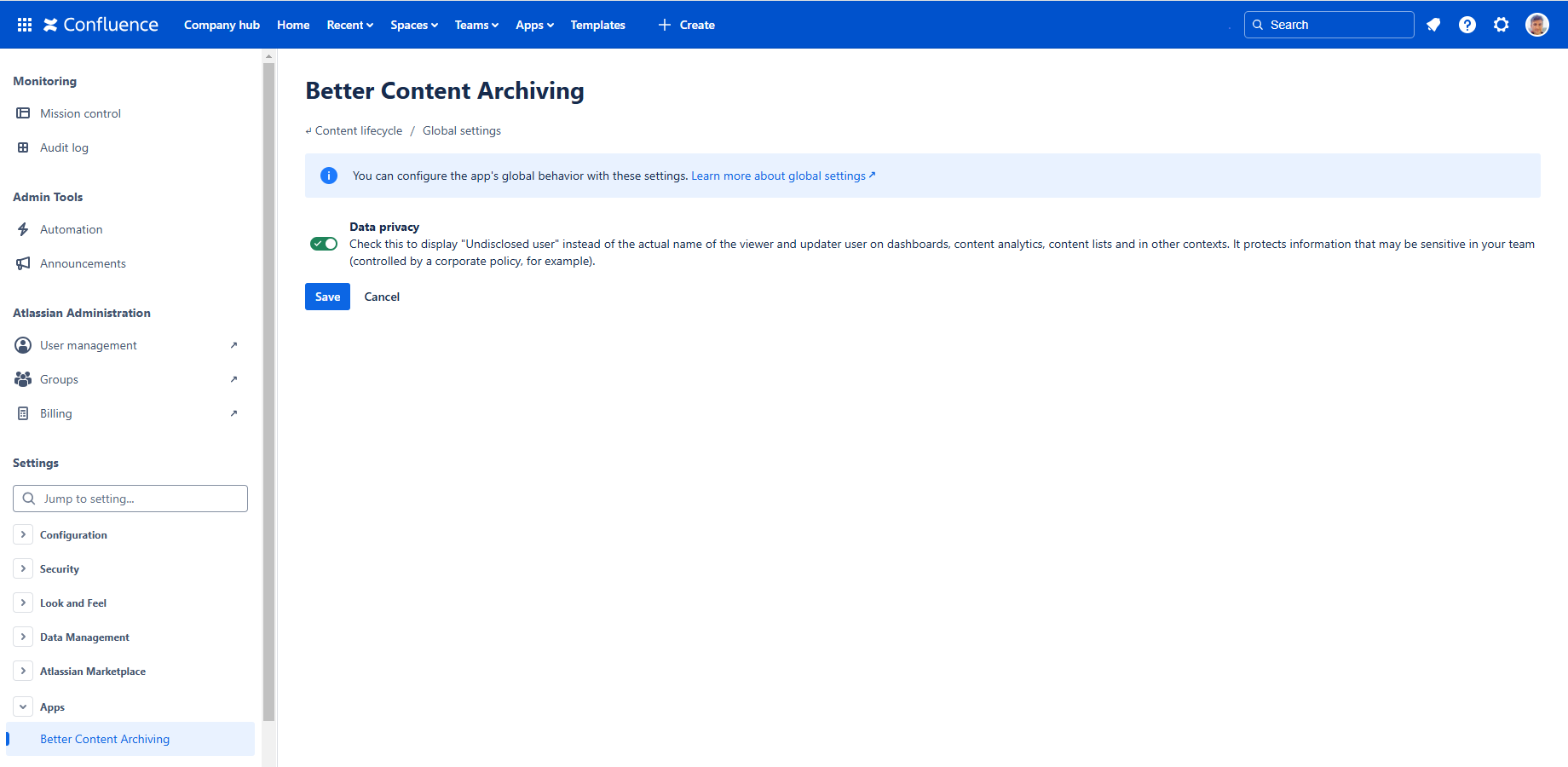
Data privacy (hiding the name of viewers and updaters)
The app allows you to hide the username of the last viewer and the last updater. These features aim to protect information that may be sensitive in certain teams (controlled by a corporate policy, for example).
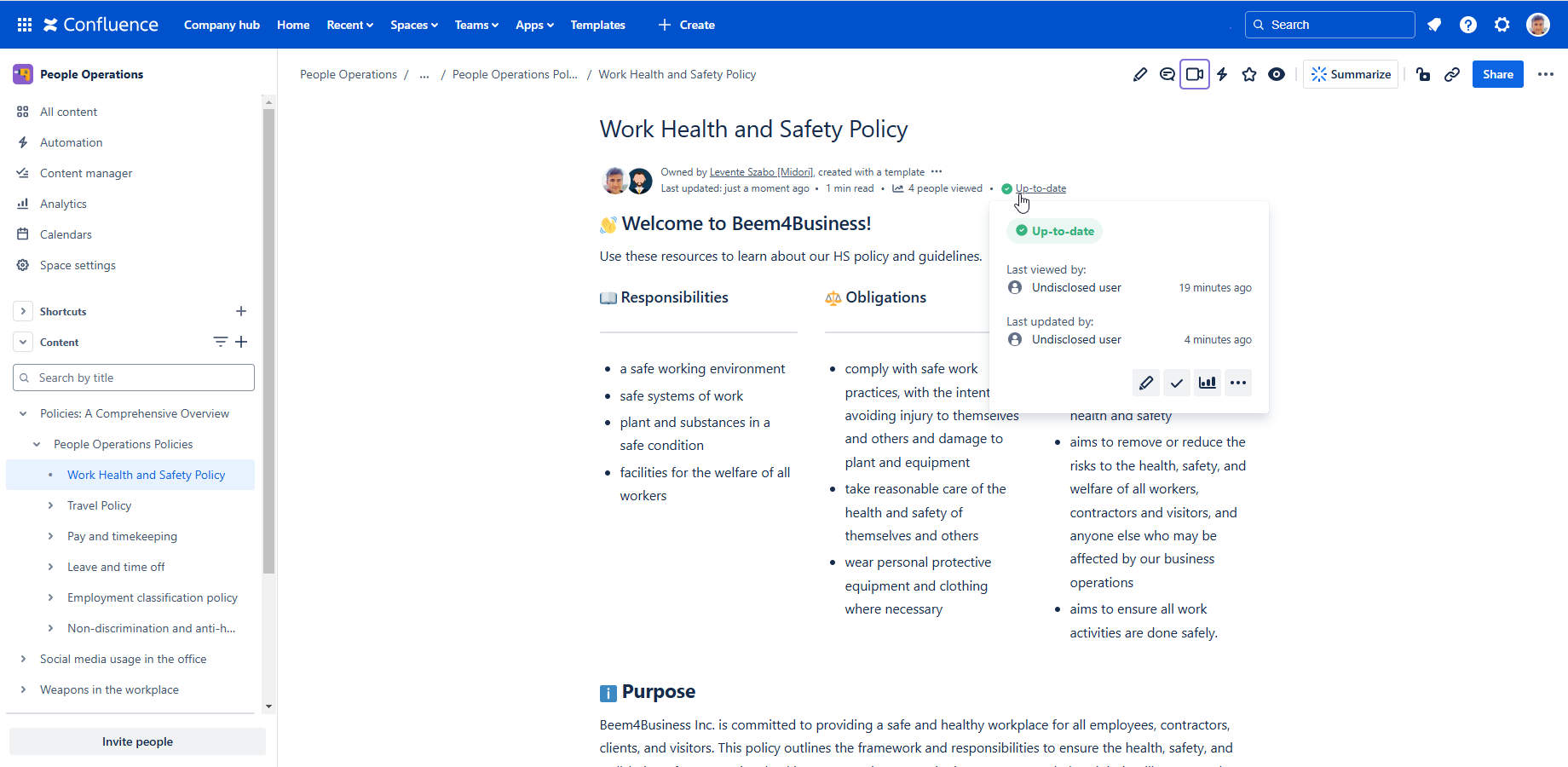
The visibility of the last viewer and updater, as well as previous viewers and updaters, is managed through the Data privacy configuration setting. When enabled, the user interface displays the anonymized piece of text "Undisclosed user" instead of the actual username:
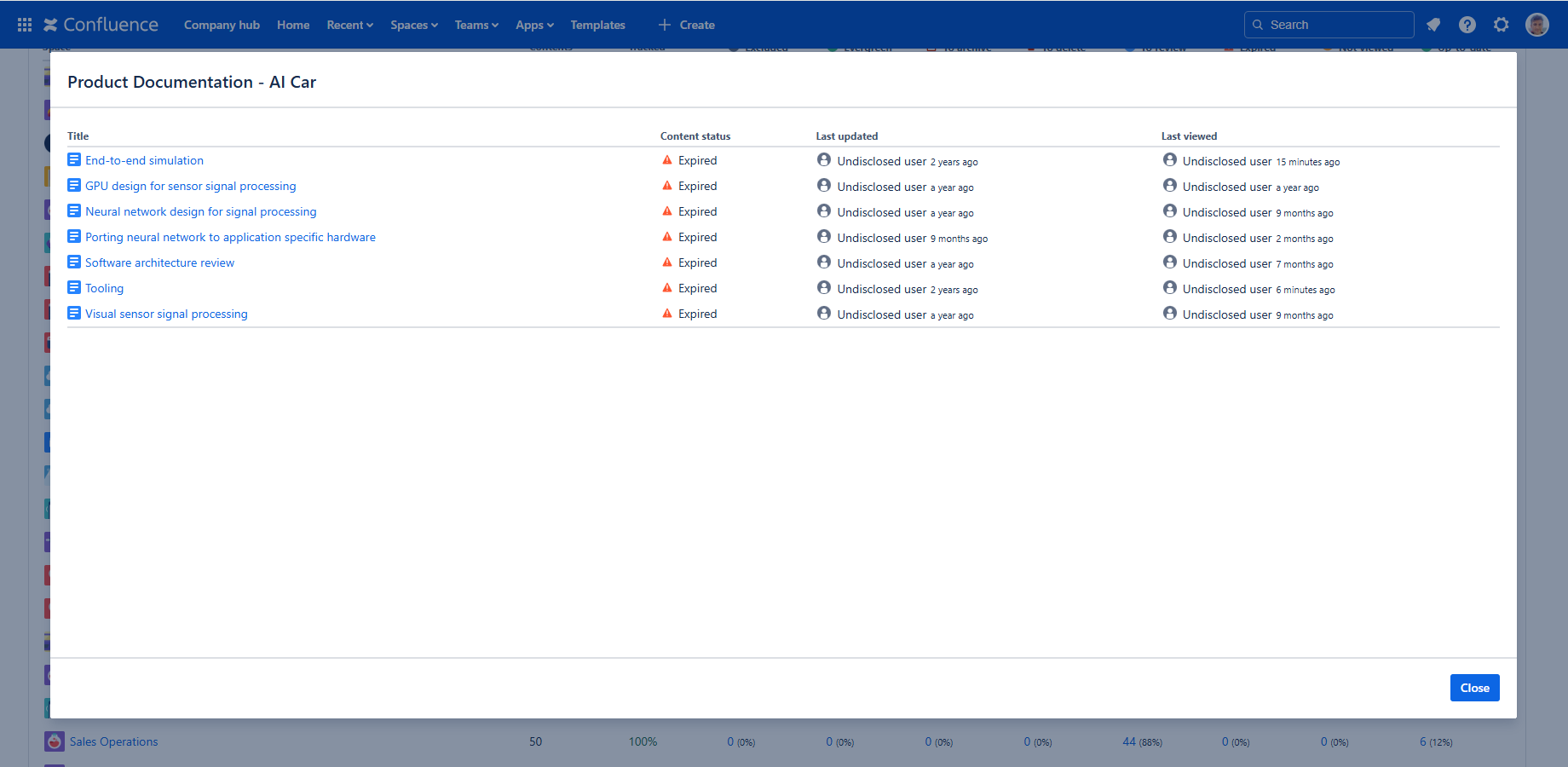
The Content Status Indicator looks like this, when anonymized:
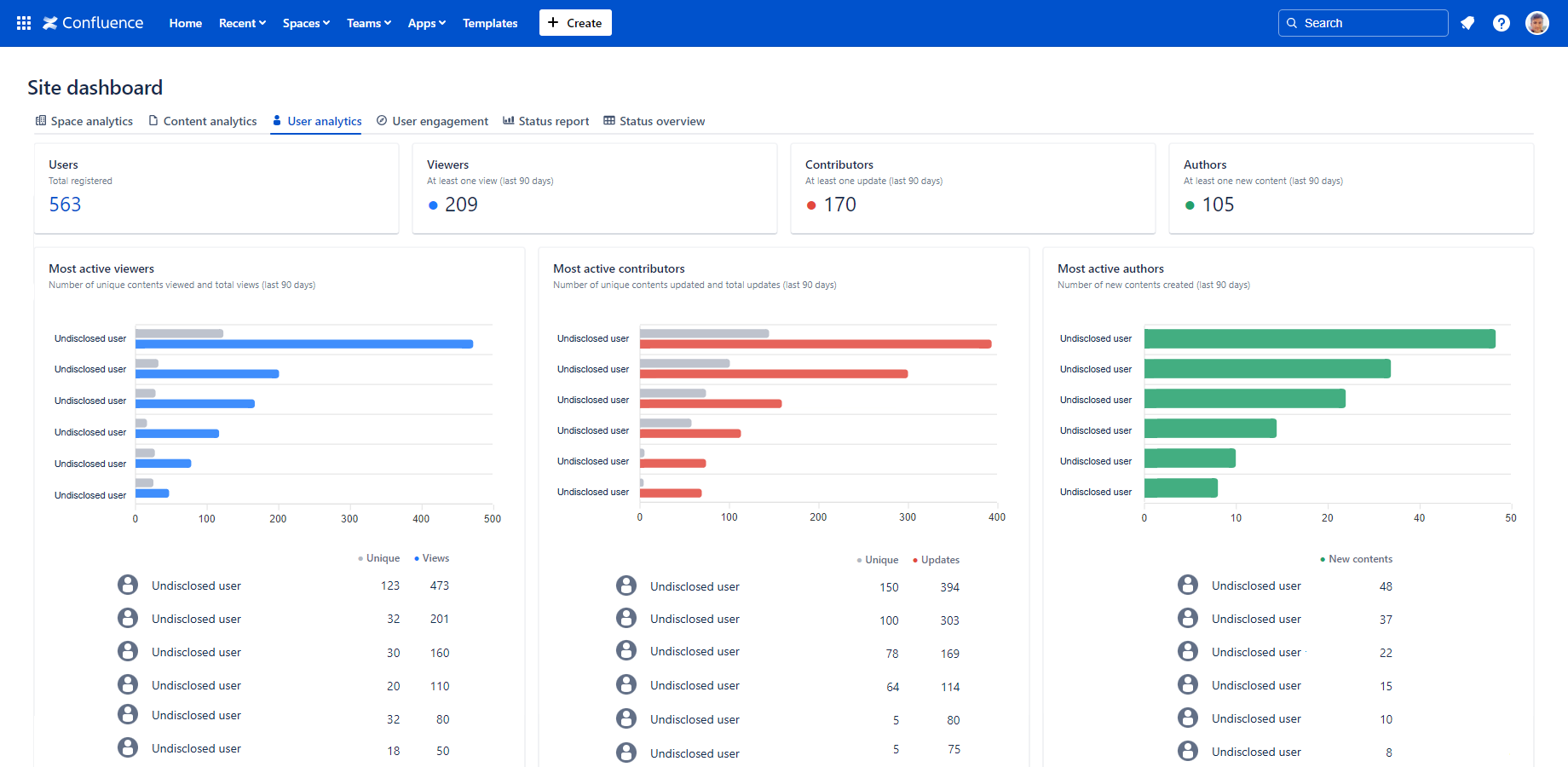
Another example is the User analytics tab of the Site dashboard, which looks like below, when anonymized:
The Data privacy configuration option affects the following user interface elements:
- Content Status Indicator
- Content Analytics
- Content Status Details
- Content List
- User analytics report
Note that even when the usernames (sensitive) are hidden, the actual dates (not sensitive) are shown. Therefore, you can know that a page was last viewed 15 days ago, for instance, but you cannot know who was the viewer.
Enable purge automation actions
You can configure automations that automatically perform actions on content at regular intervals based on specific criteria. One of the available automation actions is Purge, which permanently removes pages and blog posts.
To prevent accidental data loss, the Purge action is disabled by default. A Confluence administrator must enable it globally using this setting. Only then can it be selected in automations.
While this setting is disabled, any existing automations using the Purge action will be ignored, and you won't be able to configure new ones. If this occurs, you'll see a warning in the job execution log.
Allow archiving, deleting, or purging content that has children
By default, automation actions only apply to pages that have no children. Pages that are parents, that is, that have child pages, are skipped. When this setting is enabled, automation actions may also be applied to parent pages.
When an automation action is applied to a parent page, archiving, deleting, or purging it, its child pages are automatically moved up one level. This is standard Confluence behavior and not a specific action performed by the Better Content Archiving app.
This setting is disabled by default, to prevent unprocessed content from being moved up in the page hierarchy. Note that it has no effect if the entire page subtree would be processed anyway.
Notify users when a scheduled job fails
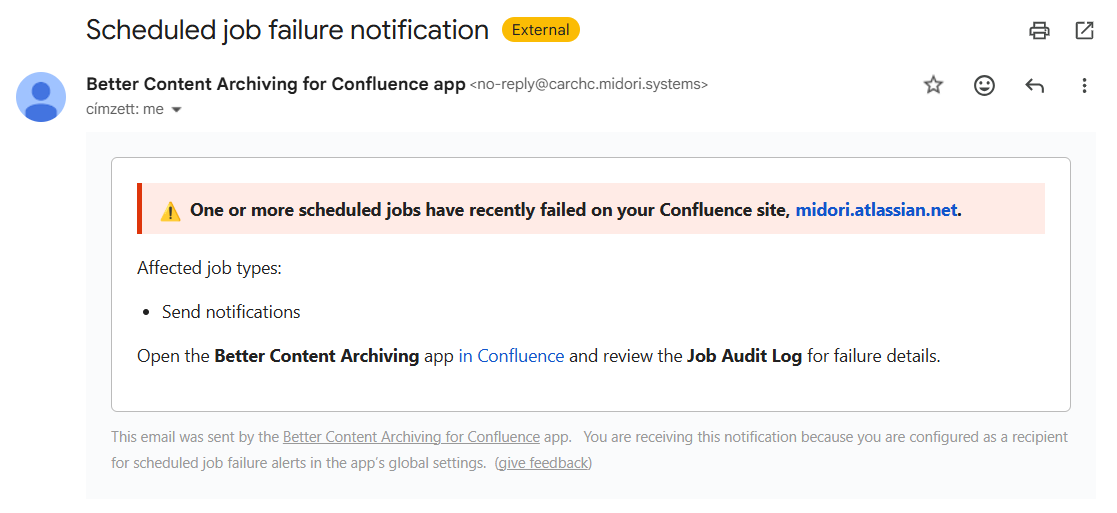
Scheduled jobs may occasionally fail due to unexpected errors. This setting makes sure that jobs which keep failing don't remain unnoticed, by notifying selected users by email.
You can select up to 10 users to be notified when at least one scheduled job failed in the last 24 hours. These should typically be the users responsible for administering the app.
Notification emails are sent daily around 1:00 AM UTC, like this:
Questions?
Ask us any time.